
Physical Intimacy: Meaning, Examples & How to Build It

Physical intimacy is one of those concepts most people think they understand — until a partner says they're not getting enough of it. The physical intimacy meaning goes well beyond sex. It covers every form of consensual touch that creates closeness between two people, from a hand held across a dinner table to a long hug after a hard day. Cuddle is one app that helps couples explore both physical and emotional closeness through structured daily exercises, but the foundation starts with understanding what physical intimacy actually is and why it matters. Research published in the Journal of Biomedical Research and Environmental Sciences (2026) found that physical affection between partners produces measurable physiological benefits. The researchers compared these effects to pharmacological interventions. That's a compelling reason to take this topic seriously.
What Is Physical Intimacy? A Clear Definition
To answer what is physical intimacy in the clearest terms: it is sensuous proximity or touch between people that expresses feelings — including warmth, affection, platonic love, or sexual attraction. The word "intimacy" itself traces back to the Latin intimus, meaning "innermost" or "deepest." That root signals that physical contact is always about more than the surface. Touch communicates things that words often can't. A squeeze of the hand during a difficult conversation, a forehead kiss before leaving for work, or a slow dance in the kitchen on a Tuesday night — each is physical intimacy in action. The physical intimacy meaning in a relationship is therefore not a single act. It is an ongoing language two people develop together.
It's also worth separating physical intimacy from sex, because conflating the two creates real problems in relationships. Sex is one form of physical intimacy, but it's far from the only one. Research shows that affectionate non-sexual touch — hugging, cuddling, holding hands, and sitting close — independently predicts relationship satisfaction and positive emotions in both partners. Couples who only touch before or during sex risk making physical connection feel transactional rather than tender. Understanding this distinction is the first step toward building a richer, more sustainable physical intimacy in your relationship.
Types of Physical Intimacy: Beyond the Obvious
Different types of physical intimacy serve different emotional needs. Couples who recognize this variety tend to feel more connected day to day. Non-sexual touch — hugs, hand-holding, back rubs, cuddling on the sofa — builds baseline safety and warmth. Sexual intimacy deepens desire and reinforces the unique bond between romantic partners. Affectionate gestures like a kiss on the cheek or a hand on the shoulder during a conversation signal presence and care. They don't require any particular mood or moment. Even eye contact and physical proximity — sitting close, leaning in — register as forms of physical intimacy that the nervous system responds to.
In my experience reviewing relationship research, the couples who struggle most with physical intimacy are often those who've narrowed their definition to sex alone. When sex becomes less frequent — due to stress, parenting, illness, or simple busyness — they feel like they've lost all physical connection. But the forms of intimacy that sustain a relationship through those seasons are the everyday ones: the hand on the back as you pass in the kitchen, the foot resting against your partner's while you watch TV. These small moments accumulate into what researchers call a reservoir of goodwill — sometimes labeled "positive sentiment override" — that buffers couples through harder times.
The Science of Touch: Why Physical Intimacy Matters
Touch triggers oxytocin — often called the "bonding hormone" or the "cuddle hormone." It promotes feelings of trust, safety, and emotional well-being. Research from Scientific American found that new lovers had double the oxytocin levels typically seen in pregnant women. Couples with the highest oxytocin levels at the start of a relationship were more likely to still be together six months later. Physical touch also reduces cortisol, the primary stress hormone. That's why a hug from a partner after a difficult day produces a measurable calming effect. These aren't soft benefits — they're hard physiological data.
The health implications extend further than most people realize. A 2026 review in the Journal of Biomedical Research and Environmental Sciences found that intimate physical behaviors between partners are linked to reduced cardiovascular disease risk, enhanced immune function, improved sleep quality, and lower rates of anxiety and depression. Physical intimacy in a relationship isn't a luxury — it's a health behavior. This is especially important for couples who dismiss touch as "not that important" during busy life phases. The compounding deficit of physical disconnection takes a real toll on both individual well-being and relationship satisfaction.

Physical Intimacy vs Emotional Intimacy: How They Connect
Physical intimacy and emotional intimacy aren't competing priorities — they're deeply interdependent. Research published in the Journal of Social and Personal Relationships found that good communication leads to emotional closeness. Emotional closeness leads to sexual fulfillment, which in turn leads to relationship happiness. In other words, these dimensions build on each other rather than trade off. Couples who feel emotionally safe with each other find physical intimacy easier and more satisfying. On the flip side, regular physical affection — even non-sexual — creates the neurochemical conditions that make emotional vulnerability feel less threatening. The two forms of intimacy reinforce each other in a positive loop.
This is why intimacy therapy often addresses emotional patterns before tackling physical ones. Therapists using Emotionally Focused Therapy (EFT) help partners understand the attachment needs driving their behavior. Often, one person pursues physical closeness while the other withdraws — not out of indifference but out of feeling overwhelmed. This pattern is sometimes called a pursuer-distancer dynamic. When couples understand it, they can interrupt the cycle with compassion rather than frustration. If you want structured support exploring these patterns together, Cuddle's guided courses cover both emotional and physical intimacy using frameworks drawn from EFT, the Gottman Method, and Attachment Theory.
Why Physical Intimacy Fades in Long-Term Relationships
Physical intimacy in a relationship doesn't fade because partners stop loving each other — it fades because life gets loud. Work stress, parenting demands, unresolved conflict, body image concerns, grief, and simple exhaustion all suppress the nervous system's openness to touch. Research shows that 21% of couples report intimacy challenges as a significant source of relationship conflict. What's important to understand is that this is a normal phase, not a verdict on the relationship. The early stages of love flood the brain with dopamine and oxytocin, creating spontaneous desire. Long-term relationships require a shift to what sex researchers call "responsive desire" — desire that arises from connection, safety, and presence rather than appearing on its own.
By the Numbers
Unresolved conflict is one of the most common intimacy suppressors. When a fight doesn't fully heal, the body remembers — and physical closeness can feel unsafe or dishonest. Body image shifts after pregnancy, illness, or aging also play a significant role that couples rarely discuss openly. The key insight from relationship science is that physical intimacy is closely tied to emotional safety. The nervous system won't allow closeness when it perceives threat, even subtle relational threat. Addressing the emotional layer — through honest conversation, repair attempts, or professional support — is almost always the prerequisite for restoring physical connection.
How to Build Physical Intimacy: Practical Strategies
Building physical intimacy starts small and builds through consistency. Relationship researcher Dr. John Gottman notes that "everything positive you do in your relationship is foreplay" — meaning that warmth, gratitude, and small affectionate gestures outside the bedroom directly influence what's possible inside it. Sex therapist Dr. Michael Stysma recommends doubling the length of time couples spend kissing, hugging, and using non-sexual touch as a practical starting point. Re-establishing daily rituals — a morning hug, a goodbye kiss, a hand on the shoulder during conversation — creates the baseline of physical connection that makes deeper intimacy feel natural rather than forced.
Shared novel experiences also help. Research published in the Journal of Marriage and Family found that activities like painting or playing games together spark oxytocin release in partners — the same bonding effect as physical touch. This is sometimes called the novelty effect: doing something new together generates curiosity and attraction that transfers to physical closeness. When rebuilding intimacy feels daunting, intimacy counseling with a licensed therapist — or structured tools like the Gottman Relationship Coach or couples apps — can provide a guided, pressure-free path. The goal isn't to recreate early-relationship chemistry but to build something more durable: responsive, intentional connection that deepens with time.

I believe the most underrated strategy for building physical intimacy is simply talking about it — openly, without blame, and with genuine curiosity about your partner's experience. Many couples treat physical intimacy as something that should happen naturally and feel embarrassed to name what they need. But research consistently shows that open communication about desires, fears, and preferences is the single strongest predictor of both physical and emotional satisfaction in long-term relationships. Intimacy questions for couples — whether asked in therapy, through a structured app, or over dinner — create the conversational safety that physical closeness requires. Don't wait for the right mood. Create the right conditions.
When to Seek Intimacy Counseling or Professional Support
Some intimacy challenges respond well to self-directed effort and structured tools. Others need professional support — and recognizing the difference matters. Intimacy therapy is worth pursuing when communication attempts consistently lead to arguments, when past trauma is affecting physical comfort, or when one or both partners feel persistently unseen or rejected. Licensed therapists using EFT, Cognitive Behavioral Therapy (CBT), or sex therapy frameworks can help couples identify the attachment patterns driving their physical disconnect and develop concrete repair strategies. Seeking this kind of support isn't a sign of failure — it's one of the most effective investments a couple can make in their long-term connection.
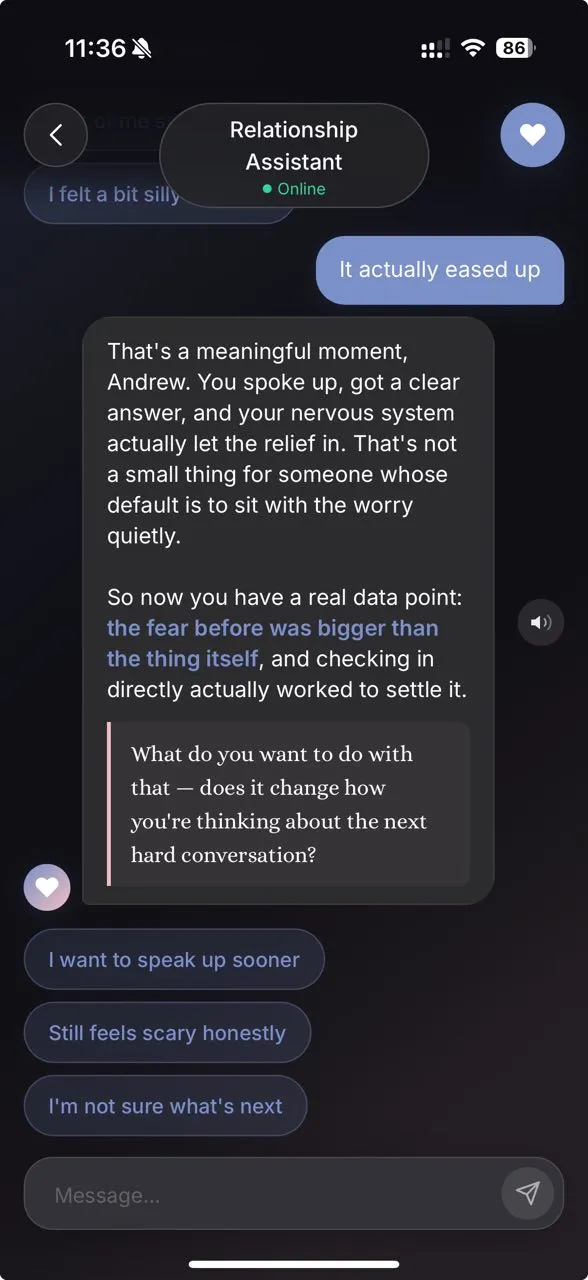
For couples who want to maintain the practices learned in therapy — or who want a lower-stakes starting point before committing to sessions — structured daily tools can bridge the gap. Apps like Paired and Lasting offer question-based connection exercises. Cuddle goes further by integrating a Relationship Assistant that holds context across sessions and adapts guidance to the specific shape of your relationship. None of these replace a licensed clinician for serious relational crises, but they work well as continuity tools between sessions or as a way to build daily intimacy habits without waiting for a weekly appointment.
Physical intimacy isn't a destination — it's a practice. The couples who sustain it over years aren't those who never lose the spark. They're the ones who learn to notice when it dims and take small, consistent steps to tend it. Whether that means a nightly check-in, a weekly date night, a course on desire and communication, or a conversation with a therapist, the direction matters more than the speed. Start with one small gesture today — and build from there.
Want to Build Physical Intimacy Daily?
Cuddle offers guided courses on physical and emotional intimacy, built on the Gottman Method and EFT.
Explore Cuddle Free for 7 DaysDisclosure: This page contains affiliate links. We may earn a commission at no extra cost to you.