
Why Do We Feel Disconnected Sometimes? Signs You're Growing Apart
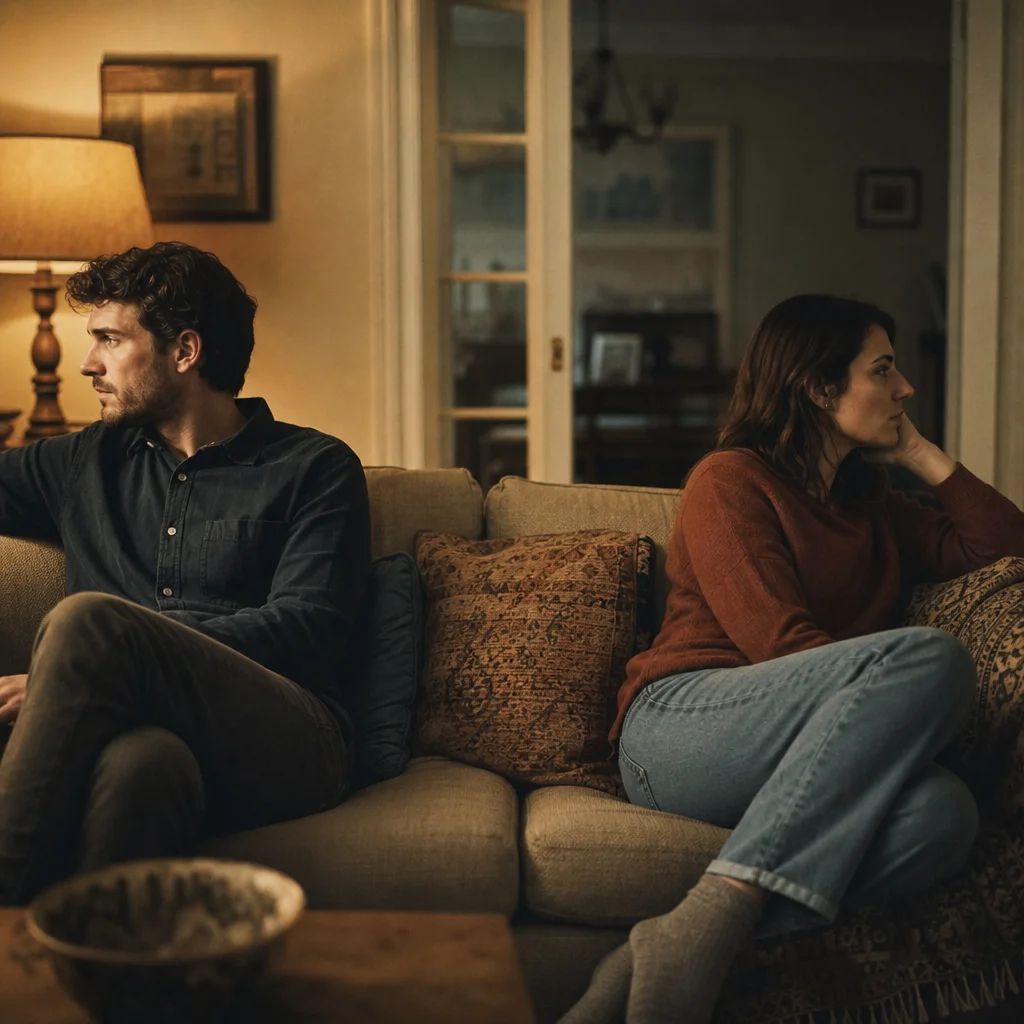
About 70% of couples report at least one significant period of emotional distance during their relationship — yet most don't recognize it until the gap has quietly widened for months. If you've been asking yourself why do we feel disconnected sometimes, you're not alone, and you're not broken. Disconnection rarely arrives with a dramatic announcement. It sneaks in through skipped conversations, shrinking laughs, and evenings that feel more like parallel solitude than shared life. If you feel like you're living separate lives or sense that we've grown apart, understanding what's actually happening — and why — is the first step toward finding each other again. For couples who want a structured daily practice to close that gap, Cuddle is one option worth exploring.
What Does Emotional Disconnection Actually Mean?
Emotional disconnection happens when partners stop sharing feelings, thoughts, or intimacy — leading to a growing sense of distance or loneliness inside the relationship. It's not the same as a rough patch. Charlie Health describes the difference clearly: a rough patch is usually tied to a specific stressor — a job loss, a family crisis, a hard month. Emotional disconnection, by contrast, is an ongoing feeling of drift that doesn't resolve when the stressor does. You might still love your partner deeply, yet feel like you're living separate lives under the same roof. In my conversations with couples I've interviewed for relationship content, I've noticed this same pattern again and again: love is still present, but closeness has quietly disappeared. That gap between love and closeness is exactly where disconnection lives.
Relationship psychologist Dr. John Gottman's research shows that couples don't typically fall apart because of conflict — they fall apart because they stop turning toward each other's emotional bids for connection. A "bid" can be as small as a glance across the room, a comment about a stressful meeting, or a hand reaching for yours on the couch. When those bids consistently go unanswered, people naturally begin to conserve emotional energy and stop reaching out. Once those small daily signals fade, a relationship can still function on the surface while the emotional foundation quietly erodes.
Why Do We Feel Disconnected Sometimes? The Real Causes
In my experience working through relationship content, I've found that couples are often surprised to learn that disconnection rarely has a single cause. Research points to several interlocking patterns that compound over time. Chronic stress is one of the biggest culprits. Studies show that elevated cortisol levels from sustained stress actively decrease both emotional intimacy and the desire for closeness. When work, finances, or parenting consume most of a couple's bandwidth, the relationship moves onto autopilot. Conversations shrink to logistics. Weekends fill with errands. Neither partner intends to drift, but both feel it happening.
A second major driver is diverging personal growth. When partners grow in different directions — new careers, shifting values, evolving social circles — without actively sharing those changes, it creates what researchers Gottman and Silver describe as growing on "separate tracks." You're both changing, but not together. The person across the dinner table starts to feel like a stranger you once knew very well. This is why couples who say "we don't laugh together like we used to" are often describing something deeper than boredom. They're describing two people who've quietly become different versions of themselves without a map back to each other.
Unresolved conflict is the third major root. Gottman's research found that one of the primary reasons relationships break down is unresolved conflict that triggers emotional disengagement and avoidance. Every argument that ends without repair leaves a small residue of resentment. Over months and years, that residue accumulates until neutral interactions start to feel irritating and small mistakes feel disproportionately upsetting. If you feel like you're stuck in a rut, this slow buildup of guardedness is often what's underneath it. The emotional climate shifts from goodwill to guardedness — and guardedness is the opposite of intimacy.
7 Signs You're Growing Apart (Not Just Having a Bad Week)
Across the dozens of couples I've spoken with and content I've edited on this topic, the same handful of signals show up over and over. Recognizing the difference between a temporary rough patch and genuine emotional drift matters, because the responses are different. Here are the clearest signs that you've grown apart rather than simply hit a wall:
- Conversations have gone transactional. Your most common exchange is "Did you pay the bill?" or "Who's picking up the kids?" The once-effortless conversations about dreams, fears, and funny observations have dwindled into scheduling logistics.
- You don't laugh together like you used to. Shared humor is one of the fastest indicators of emotional closeness. When laughter disappears from a relationship, it's rarely about comedy — it's about emotional safety.
- Physical affection has quietly faded. Less touching, fewer spontaneous hugs, and a growing physical distance in bed. This isn't always about sex — it's about the small acts of warmth that signal "I still see you."
- You feel emotionally disconnected from you partner even in the same room — the thought "i feel emotionally disconnected from you" starts showing up unprompted. You can be sitting side by side and feel miles apart. Loneliness inside a relationship is one of the most disorienting experiences a person can have.
- You've stopped making repair attempts after conflict. Repair attempts — the small gestures that say "I don't want to stay in this fight" — are the single biggest predictor of long-term relationship success, according to Gottman research. When they stop, resentment fills the space.
- The future feels hazy or hard to picture together. In a connected relationship, planning the future feels natural. When you're growing apart, even a simple vacation conversation can feel loaded or pointless.
- You feel like you're living separate lives. Separate hobbies, separate friend groups, separate evenings — none of these are problems on their own. But when the "separate" starts to feel like relief rather than balance, it signals a deeper drift.

How to Reconnect When You Feel Like You're Living Separate Lives
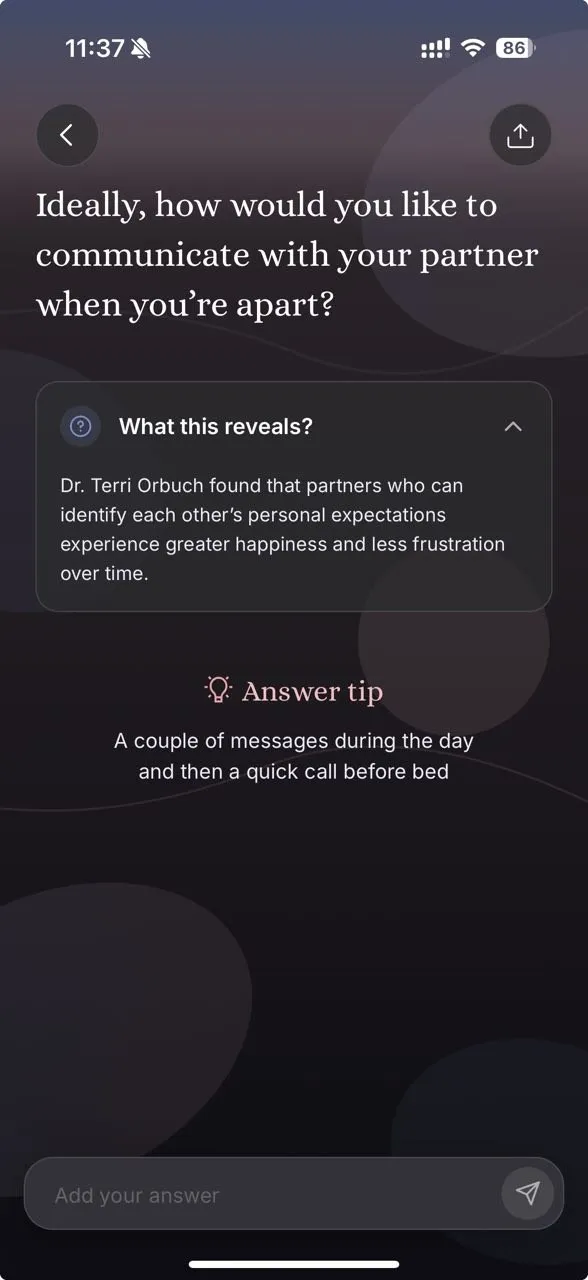
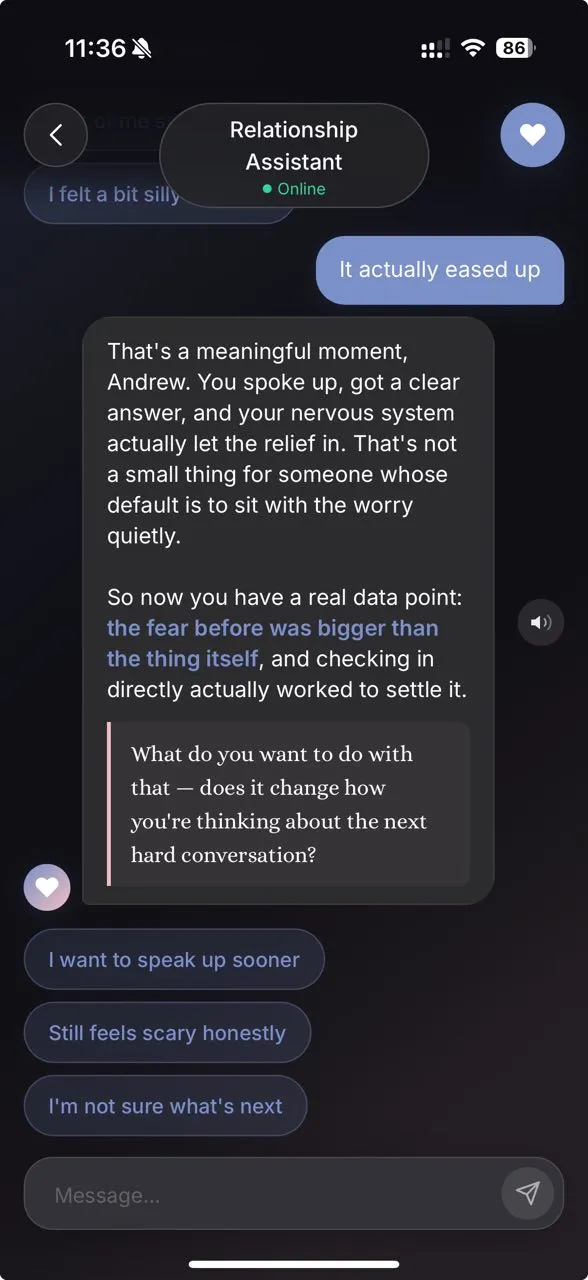
Here's what I believe matters most when couples try to reconnect: the goal isn't to go back to who you were — it's to choose to grow forward together. Reconnection requires deliberate effort from both partners, but it doesn't have to be dramatic. Research consistently shows that small, consistent actions signal commitment and gradually restore closeness far more effectively than grand gestures. The American Association of Marriage and Family Therapy reports that around 70–75% of couples show improved relationship satisfaction after engaging in couples work — which is a genuinely hopeful statistic for anyone who feels stuck. If you feel like you're stuck in a rut, that's not a verdict. It's a starting point. For couples who want a structured way to rebuild daily connection, Cuddle's guided courses and daily questions offer one practical approach — built around Gottman Method and Emotionally Focused Therapy (EFT) frameworks.

Start with the smallest possible version of turning toward each other. Ask a real question — not "How was your day?" but something that requires actual thought. Share something you noticed about yourself this week. Make eye contact during dinner without a screen nearby. These micro-moments matter more than they look, because they rebuild the habit of noticing each other. Psychological research published in the Journal of Personality found that people who approach conversations with genuine curiosity feel more connected to others — even in relatively ordinary exchanges. Curiosity, it turns out, is one of the most underrated tools in a relationship.
When to Seek Professional Support
Some disconnection responds well to intentional daily habits and honest conversation. But when the drift has been building for years, when there's accumulated resentment, or when one or both partners feel emotionally unsafe, professional support makes a meaningful difference. Emotionally Focused Therapy (EFT) — developed by Dr. Sue Johnson — is one of the most well-researched approaches for couples navigating emotional distance, with strong outcomes for rebuilding attachment and trust. The Gottman Method is another evidence-based framework widely used by couples therapists. Both approaches work by helping partners understand the cycle they're caught in, rather than focusing on who's to blame. A licensed couples therapist can help you see the pattern from the outside — which is often exactly what's needed when you're too deep inside it to see clearly.
I believe the most important thing to understand about disconnection is this: feeling emotionally disconnected from your partner does not mean the relationship is over, that you've fallen out of love, or that you made a mistake. It means you're two people who've been living busy lives and haven't tended to the space between you. That space is repairable. Many couples feel genuinely closer after navigating a period of disconnection than they did before — because working through it together builds a kind of trust that easy seasons can't. The question isn't whether reconnection is possible. It almost always is. The question is whether both of you are willing to start.
Want to Start Closing the Gap Today?
Five minutes a day of guided connection, built on real relationship science.
Try Cuddle Free for 7 DaysDisclosure: This page contains affiliate links. We may earn a commission at no extra cost to you.