Are We Spending Enough Quality Time Together? Signs & Fixes

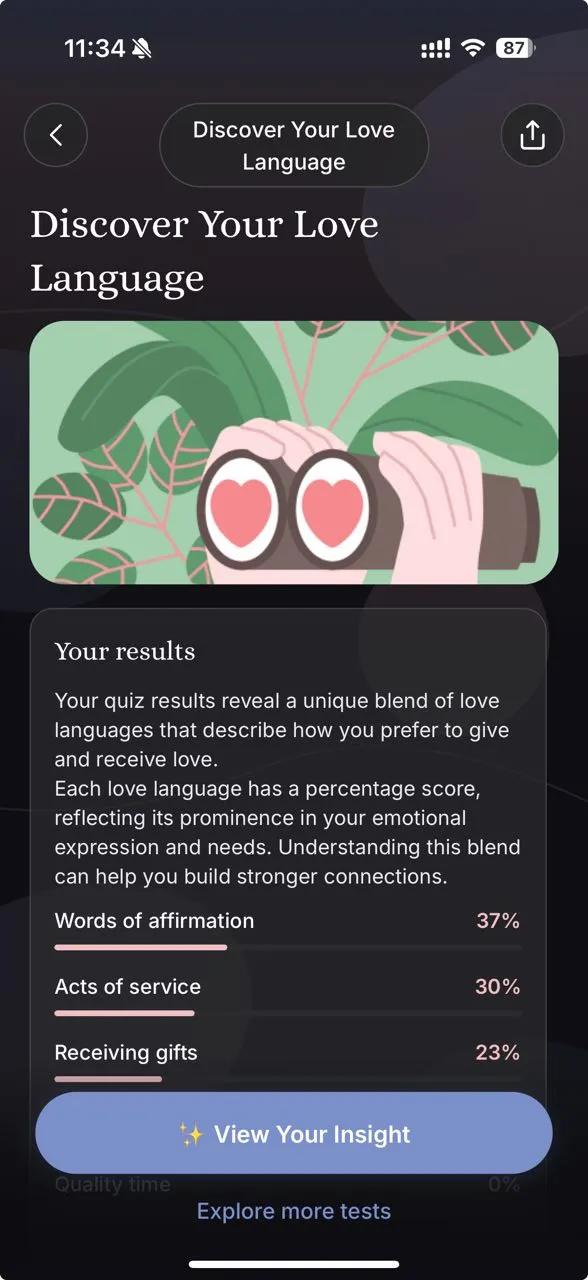
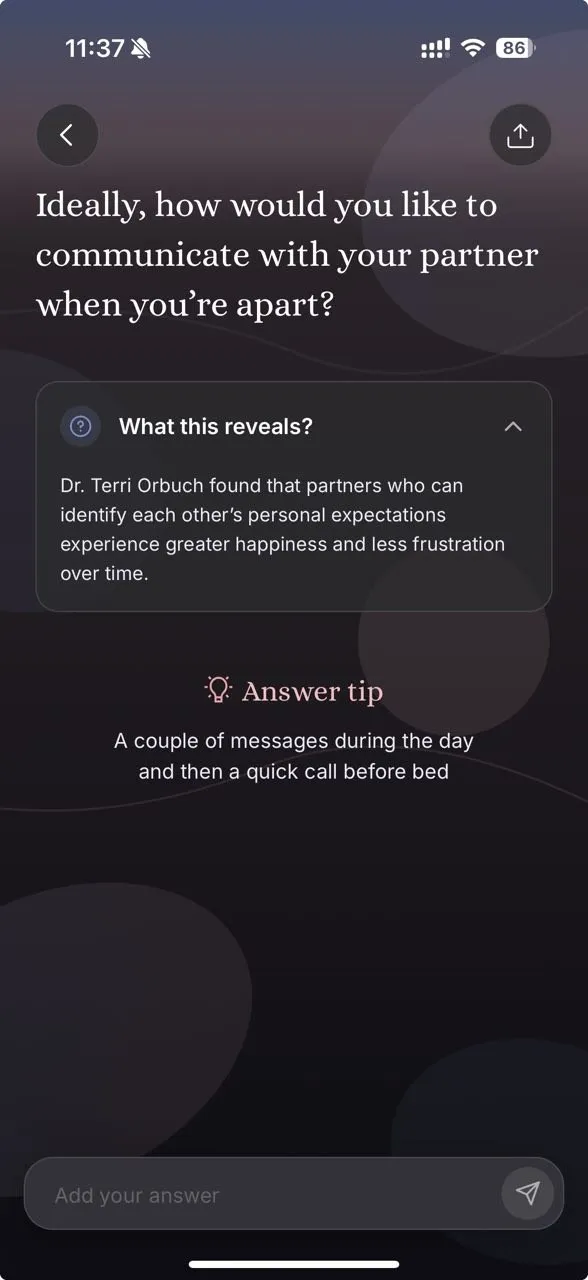
Research shows that working adults have roughly one hour of quality time available per day to spend with loved ones — and for couples juggling careers, kids, and competing demands, even that hour often disappears. If you've caught yourself wondering whether you and your partner are spending enough quality time together, you're not alone. That question surfaces in couples therapy offices, in late-night conversations, and in the quiet moments when you realize you can't remember the last time you really talked. This article walks you through what quality time actually means, the clearest warning signs you're not getting enough of it, and — more importantly — concrete ways to fix it. If you want a structured daily ritual to stay connected, Cuddle is one app couples use for exactly that.
What Quality Time Actually Means (and What It Doesn't)
Most couples assume they're spending quality time together simply by being in the same room. Scrolling phones on the same couch, watching TV in parallel, running errands side by side — none of that counts. Gottman Institute research is clear that quality time means focused, distraction-free interaction — the kind where you're genuinely present with each other. Dr. John Gottman recommends couples aim for at least five hours of intentional connection per week, and that time should exclude household logistics, what he calls "shop talk." The goal is engagement that builds emotional intimacy, not just physical proximity.
A classic study published in the Journal of Social and Personal Relationships found that the sheer amount of time couples spend together doesn't drive relationship satisfaction on its own — what you do with that time does. A 2025 study in the Journal of Personality and Social Psychology reinforced this, showing that couples who deliberately carved out mood-positive shared experiences reported measurably higher relationship satisfaction than those who simply logged hours together. Quality beats quantity, every time. That distinction matters when you're diagnosing whether you and your partner are truly connected or just coexisting.
Signs You're Not Spending Enough Quality Time Together
One of the clearest signals that you don't spend enough quality time together is a slow, creeping sense of emotional distance — the feeling that you know your partner's schedule but not their inner world. You stop asking real questions. Conversations shrink to logistics: who's picking up the kids, what's for dinner, did you pay the bill. Relationship coach Daphney Poyser puts it plainly: it's easy to let day-to-day distractions make you lose sight of the time and energy you're putting into your relationship. When you can't remember the last meaningful conversation you had, that's a sign worth taking seriously.
Other warning signs are subtler. You might notice that date nights have quietly vanished from the calendar, that you feel like roommates rather than romantic partners, or that one of you feels the urge to fill every shared silence with a phone. If one partner feels like they can't be themselves around the other — guarded, performative, or emotionally flat — that often signals a deficit of real connection time, not a personality mismatch. Here are the most common red flags to watch for:
- Conversations stay surface-level — logistics only, no vulnerability
- You've stopped scheduling date nights or shared rituals
- One or both partners feel emotionally distant or "roommate-ish"
- You feel like you can't be yourself around your partner anymore
- Small irritations escalate into disproportionate arguments
- You don't know what's currently stressing your partner out
Is It Normal to Sometimes Want Space from Your Partner?
Absolutely — and this is where many couples get confused. The question of whether you're spending enough quality time together has a flip side: spending too much low-quality time together can feel just as disconnecting. It's completely normal to sometimes want space from your partner. Every person, regardless of how extroverted or in love they are, needs time to recharge, reflect, and maintain their individual identity. Relationship experts often suggest a rough 70/30 guideline — about 70% of time together, 30% apart — though this varies widely by couple. The key insight is that healthy solitude actually improves the quality of time you spend together, because you return to each other with more to give.
The problem isn't needing space — it's when one partner consistently interprets the other's need for alone time as rejection, or when "space" becomes a default mode that replaces genuine connection. If you find yourself feeling like you can't be yourself around your partner even when you are together, that's worth examining. It may point less to time quantity and more to the emotional safety within your relationship. Apps like Cuddle and structured couples workbooks (like those rooted in Emotionally Focused Therapy) offer guided prompts that help partners articulate these needs without it turning into a conflict.
Practical Fixes: How to Reconnect Without Overhauling Your Life
The good news: you don't need a weekend retreat or a radical schedule change to fix a quality time deficit. Small, consistent investments compound faster than occasional grand gestures. Research on relationship maintenance consistently shows that daily micro-rituals — a six-second kiss, a genuine "how are you really?" before bed, a shared question over coffee — do more for long-term connection than sporadic big events. Gottman's six-second kiss, for instance, is a deliberately mindful physical connection that lowers cortisol, boosts oxytocin, and builds what researchers call a "ritual of connection." The point isn't the kiss itself — it's the intentionality behind it.
When you're ready to be more deliberate, here are evidence-backed approaches couples find effective:
- Schedule it — treat connection time like any other non-negotiable commitment on your calendar
- Go phone-free — even 30 minutes of undivided attention outperforms two hours of half-presence
- Ask better questions — move beyond "how was your day?" to "what's been on your mind lately?"
- Vary the activity — novelty activates the same reward circuits as early-stage romance
- Use structured prompts — intimacy questions for couples (from therapy frameworks or apps) remove the awkwardness of not knowing where to start
- Revisit shared rituals — a standing Sunday walk or a weekly cooking night creates predictable connection anchors
When to Consider Couples Counseling or Professional Support
Sometimes the quality time gap isn't about scheduling — it's about unresolved conflict, attachment wounds, or patterns that have calcified over years. If you and your partner argue constantly about how much time to spend together, feel resentment building, or if one partner feels like the other doesn't love them anymore, those are signals that the issue runs deeper than a calendar fix. In those cases, a licensed couples therapist — particularly one trained in Emotionally Focused Therapy (EFT) or the Gottman Method — can help you identify the underlying dynamic and rebuild safety. Intimacy counseling is not a last resort; it's a proactive tool. Seeking support demonstrates commitment, not failure.
In my experience working through relationship patterns, the couples who struggle most aren't the ones who spend the least time together — they're the ones who've stopped being intentional about the time they do have. Whether you use a therapist, a structured app, a couples workbook, or just a standing phone-free dinner, the method matters far less than the decision to make connection a priority. Start small, stay consistent, and check in with each other about what's working. That conversation itself — "are we spending enough quality time together?" — is already a step in the right direction.

Want a Simple Daily Connection Ritual?
Cuddle gives couples five-minute guided exercises built on relationship science.
Try Cuddle Free for 7 DaysDisclosure: This page contains affiliate links. We may earn a commission at no extra cost to you.