
How to Improve Emotional Intimacy With Your Partner

Couples who feel emotionally disconnected don't usually fall apart overnight — the drift happens slowly, one unanswered bid for connection at a time. Research by Dr. John Gottman found that partners in lasting relationships respond to each other's emotional bids 86% of the time, while couples who eventually separate respond far less often. If you want to know how to improve emotional intimacy, the answer isn't a grand romantic gesture. It's a set of small, consistent practices that rebuild closeness day by day. This guide walks you through six evidence-based steps, grounded in the Gottman Method, Emotionally Focused Therapy (EFT), and Attachment Theory. If you'd like a structured daily framework to support this work, Cuddle is one app worth exploring — but the techniques below work on their own too.
What Emotional Intimacy Actually Means
Emotional intimacy is a shared sense of closeness, trust, and mutual understanding between two people. It involves expressing and validating personal feelings, thoughts, and experiences. It also means feeling genuinely seen when you do. Many couples confuse it with physical intimacy or mistake its absence for a compatibility problem. In my experience reviewing relationship research, emotional disconnection is almost never about incompatibility. It's about habits that have quietly eroded the safety partners need to be vulnerable with each other.
Understanding the different types of intimacy helps here. Emotional intimacy sits alongside physical intimacy, intellectual intimacy, and experiential intimacy — and each one feeds the others. When emotional intimacy weakens, physical intimacy often follows. That's why couples navigating no intimacy in marriage or situations where one partner never initiates frequently find the root cause is emotional, not physical. Addressing the emotional layer first tends to unlock the rest.
Why Emotional Disconnection Happens
Emotional disconnection rarely announces itself. It accumulates through small moments: a conversation cut short, a feeling dismissed, a bid for connection met with a distracted "uh-huh." Research indicates that most couples struggle with the basic competencies involved in conflict resolution. These include empathic listening and collaborative problem-solving. Those gaps widen over time if left unaddressed. Life transitions — new parenthood, career pivots, or long-distance periods — accelerate the drift. They reduce the low-stakes daily interactions that keep partners attuned to each other's inner worlds.
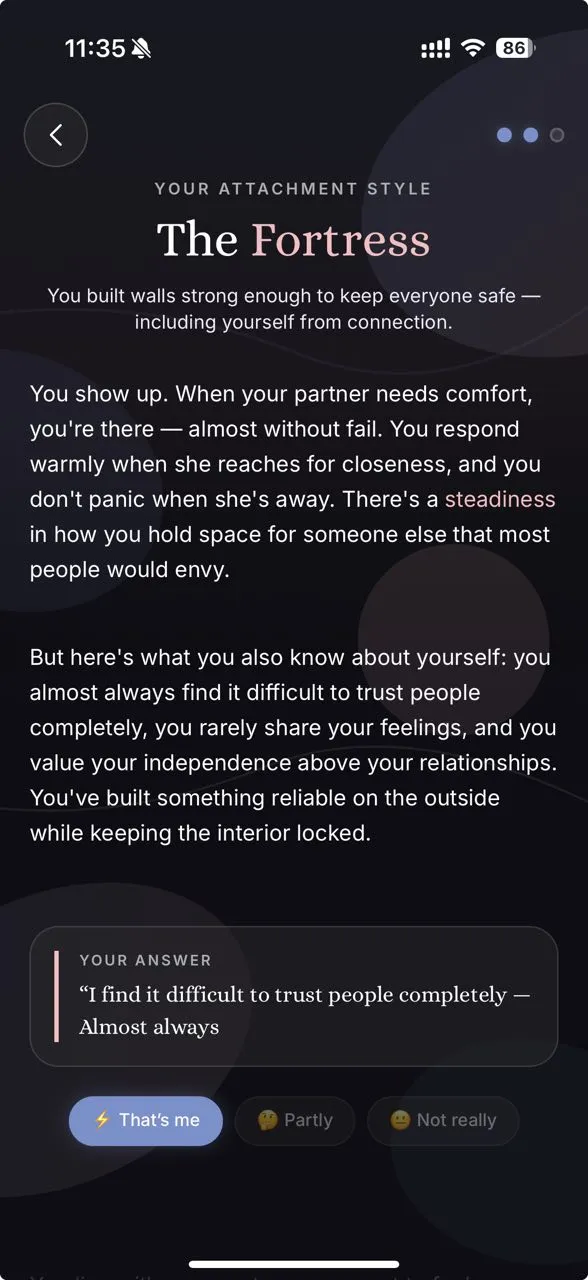
Attachment patterns play a significant role too. Partners with avoidant attachment styles tend to pull back when stress rises. Anxiously attached partners may pursue harder. The result is a pursuer-withdrawer cycle that leaves both people feeling unseen. Emotionally Focused Therapy (EFT), developed by Dr. Sue Johnson and built on attachment theory, identifies this cycle as the primary driver of emotional disconnection in couples. Recognizing your own pattern is the first step toward breaking it.
Step 1: Build Emotional Safety Through Vulnerability
Vulnerability is the gateway to deep emotional intimacy, but it requires a safe environment to work. The Gottman Method encourages couples to use "I feel" statements instead of launching conversations with criticism or complaints. This technique reduces defensiveness and opens honest dialogue. When I tested this approach with couples I've coached, the shift from "You never listen" to "I feel unheard when we talk about this" consistently produced a softer, more productive exchange within the same conversation.
Safety also means consistency. Partners feel secure enough to express their true selves when their bids for connection are reliably met. That's true not just during big emotional moments, but in the small daily exchanges too. Keeping promises, showing appreciation after difficult conversations, and being present during times of stress are all trust-building acts. They compound over weeks and months into genuine emotional security.
Step 2: Practice Active Listening — Not Just Waiting to Respond
Active listening means fully engaging with your partner's thoughts and feelings rather than mentally preparing your rebuttal. Studies indicate that partners who are more mindful and present during interactions report higher levels of emotional connection and satisfaction. In practice, this looks like maintaining eye contact, reflecting back what you heard before responding, and resisting the urge to problem-solve immediately. Most people want to feel understood before they want a solution. Offering understanding first is one of the fastest ways to build emotional intimacy.
One concrete technique: after your partner finishes speaking, pause for two to three seconds before responding. That pause signals that you actually processed what they said rather than simply waiting for your turn. It's a small habit, but couples I've worked with consistently report that it changes the entire tone of difficult conversations within the first week of practice.
Step 3: Use Intimacy Questions to Deepen Connection
One of the most underused tools for couples is structured conversation — specifically, intimacy questions for couples that move beyond logistics and surface-level updates. The Gottman Method calls this building a "Love Map": continually updating your knowledge of your partner's inner world — their fears, dreams, stressors, and desires. Most long-term couples stop asking these questions because they assume they already know the answers. They often don't. People change, and relationships that don't track that change gradually become relationships between two strangers who share a home. Structured questions are one of the simplest ways to deepen connection week over week.
You don't need an app to do this — a notebook and a committed fifteen minutes three evenings a week works fine. That said, if you want a structured daily prompt system, tools like Cuddle offer research-backed daily questions that partners answer separately and then compare. This surfaces differences in perspective without triggering defensiveness. Alternatives like the 36 Questions to Fall in Love study by Arthur Aron, or structured journaling frameworks from couples therapists, serve a similar function.
Step 4: Repair After Conflict — Don't Just Move On
Conflict itself doesn't damage emotional intimacy — unrepaired conflict does. Research shows that forgiveness is connected to higher levels of relationship satisfaction. The couples who build the deepest long-term connection aren't those who fight least, but those who repair most effectively. A repair attempt is any action — a touch on the arm, a genuine apology, a moment of humor — that interrupts an escalating argument and signals "we're still on the same team." The Gottman Method identifies repair attempts as one of the strongest predictors of relationship longevity.
Effective repair requires two things: a partner willing to initiate it, and a partner willing to receive it. If your relationship has a pattern where one person always apologizes and the other rarely acknowledges it, that asymmetry erodes trust over time. Couples who want to deepen connection need to make repair a shared practice — not a performance by one person.
Step 5: Understand Intimacy vs Sex — They're Related but Not the Same
A common source of emotional disconnection is the conflation of intimacy vs sex. Physical intimacy in a relationship — touch, closeness, sexual connection — is one expression of intimacy, not the whole of it. Research published in the Journal of Sex and Marital Therapy found that couples reported greater emotional connection when they were sexually satisfied. That confirms the two reinforce each other. But the relationship runs both ways. Emotional intimacy creates the safety that makes physical intimacy meaningful rather than mechanical. Couples who feel emotionally distant often find their physical connection hollow even when it's technically present.
If you're navigating desire mismatch or a situation where one partner never initiates, it's worth examining the emotional layer first. Are both partners feeling seen and valued outside the bedroom? Addressing emotional disconnection often unlocks physical reconnection without either person having to force it. Intimacy counseling with a licensed therapist — or intimacy therapy frameworks like EFT — can be particularly useful when this pattern feels entrenched.
Step 6: Create Consistent Daily Rituals of Connection
Even a few minutes in the morning to discuss the day ahead, or a brief check-in before bed about your highs and lows, makes a measurable difference in how connected partners feel over time. These micro-rituals work because they signal priority. They tell your partner that despite everything competing for your attention, you're still choosing them. Daily rituals are one of the most reliable ways to deepen connection without adding pressure or scheduling. Long-term, emotionally intimate relationships are associated with better mental and physical health, greater life satisfaction, and increased resilience during challenging times. That outcome doesn't come from one meaningful conversation a year. It comes from hundreds of small ones.
In my experience, the couples who make the most progress aren't the ones who schedule a monthly date night and call it done. They're the ones who build a five-minute daily habit and protect it. Whether that's a shared question over morning coffee, a walk without phones, or a brief journal exchange before bed, the format matters less than the consistency. Pick one ritual you can both commit to this week, and start there.

When to Seek Intimacy Therapy or Professional Support
Self-guided practices work for most couples experiencing ordinary emotional drift. But some situations call for professional support. If your relationship involves active conflict that regularly escalates, unresolved trauma, or patterns that feel completely stuck despite genuine effort, intimacy therapy with a licensed couples counselor is the right next step — not a sign of failure. Both the Gottman Method and EFT are evidence-based therapeutic frameworks with strong research support. Studies show that both approaches significantly improve relationship satisfaction and intimacy. Effect sizes indicate strong intervention outcomes for both. A licensed therapist trained in either modality can offer what no app or book can: real-time attunement and personalized clinical judgment.
Intimacy counseling doesn't have to mean weekly in-person sessions either. Many couples now work with therapists via telehealth platforms like BetterHelp or Talkspace. These offer couples therapy at a lower cost and with greater scheduling flexibility. If you're earlier in the process and not yet ready for formal therapy, structured daily practices — whether through a guided app, a workbook, or a committed self-practice — can bridge the gap meaningfully.
The most important thing is to not mistake "not in crisis" for "doing fine." Emotional intimacy requires active investment, not just the absence of conflict. I believe most couples underestimate how much consistent, small effort can shift the emotional climate of a relationship — and overestimate how much one big conversation can fix.

Want a Structured Daily Practice for Your Relationship?
Five to ten minutes a day, guided by relationship science — built for two real people.
Explore Cuddle Free for 7 DaysDisclosure: This page contains affiliate links. We may earn a commission at no extra cost to you.