
Sex vs Intimacy: Key Differences Every Couple Should Know

About 46% of couples in long-term relationships report feeling emotionally disconnected from their partner — even when their sex life is technically active. That gap between sex vs intimacy is one of the most common and least talked-about tensions in modern relationships. Understanding the difference between the two isn't just academic: it changes how you read your partner's needs, how you interpret conflict, and what you actually do to feel closer. If you've ever wondered why physical intimacy alone doesn't seem to fill a certain emptiness, or why your partner seems distant even after a great night together, this guide is for you. If you want a structured way to start exploring these questions together, Cuddle is one app couples use to do exactly that.
What Is Intimacy in a Relationship?
Intimacy is the experience of being truly seen, known, and safe with another person. It's broader and deeper than any single act — including sex. According to relationship researchers, what is intimacy in a relationship comes down to four core dimensions: emotional closeness, intellectual connection, physical (but not exclusively sexual) touch, and shared vulnerability. You can feel profound intimacy holding your partner's hand during a hard conversation. You can also have sex with someone and feel completely alone afterward. The two experiences don't automatically overlap.
The intimacy definition most therapists use centers on mutual vulnerability — the willingness to be fully known and to know your partner in return. Emotionally Focused Therapy (EFT), one of the most research-supported frameworks in couples work, describes intimacy as the secure emotional bond that forms when both partners feel consistently responded to and valued. Without that bond, even frequent sex can leave both people feeling hollow. This is why the types of intimacy matter so much: emotional, intellectual, experiential, and physical intimacy each feed the relationship in different ways. For couples who want to start small, our guide on attachment styles in relationships is a useful next step.
The Different Types of Intimacy Couples Often Overlook
Most people default to thinking of physical intimacy when the word comes up. But the different types of intimacy cover far more ground. Emotional intimacy is the ability to share fears, joys, and vulnerabilities without fear of judgment. Intellectual intimacy means genuinely engaging with each other's ideas and perspectives. Experiential intimacy builds through shared activities — cooking a meal together, navigating a difficult trip, or simply watching the same show and talking about it afterward. Spiritual or values-based intimacy connects couples around meaning, purpose, and what they believe matters in life.
Physical intimacy meaning extends well beyond intercourse. It includes non-sexual touch — a hand on the back, a long hug, sitting close on the couch. Research from The Gottman Institute shows that small, consistent bids for connection (a touch, a glance, a brief check-in) are the real currency of long-term closeness. Couples who respond to these bids regularly report significantly higher relationship satisfaction than those who don't, regardless of how often they have sex. In my experience working through relationship content, the couples who struggle most aren't the ones having less sex — they're the ones who've stopped reaching for each other in the small moments.

Sex vs Intimacy: Where the Confusion Starts
Our culture frequently conflates sex with intimacy, and that confusion causes real damage in relationships. Sex is a physical act. It can express deep love, or it can be entirely transactional — and both versions happen in long-term partnerships. Intimacy vs sex isn't a competition; it's a distinction. The problem starts when one partner uses sex as a proxy for emotional connection while the other needs emotional connection before they can fully engage sexually. This mismatch is one of the most common patterns couples therapists encounter, and it rarely resolves on its own.
A well-known observation in couples therapy is that men often feel emotionally connected after sex, while many women need to feel emotionally connected before they want sex. This isn't a hard rule — it varies by individual, attachment style, and relationship history — but it captures a real tension. When one partner pursues sex hoping to feel close, and the other partner needs closeness to want sex, the couple enters a cycle where both people feel rejected and neither gets what they actually need. Understanding this loop is the first step toward breaking it.
"My Husband Wants Sex but Not Intimacy" — Understanding the Pattern
This is one of the most searched phrases in relationship advice — and for good reason. When someone says "my husband wants sex but not intimacy," they're usually describing a partner who seeks physical connection but avoids the emotional vulnerability that true closeness requires. Therapists who work with this pattern often note a common root. Many men learned early in life that sex was the only "safe" doorway into emotional connection. Softer forms of affection — unprompted touch or emotional check-ins — felt risky or were simply never modeled for them. That doesn't make the behavior acceptable, but it does make it understandable and, importantly, changeable.
The same dynamic can run in reverse — a partner of any gender can use sex to avoid the deeper vulnerability that emotional intimacy demands. Fear of rejection, avoidant attachment patterns, and unresolved childhood experiences can all make emotional openness feel more threatening than physical exposure. If this pattern sounds familiar, the most productive question isn't "why doesn't my partner love me?" Instead, ask "what does closeness feel like for each of us, and where are we actually missing each other?" That reframe is where real progress begins — and it's also where structured intimacy questions for couples, whether from a therapist, a workbook, or a guided app, can genuinely help.
If you're navigating this pattern right now and want a structured starting point, Cuddle's guided courses on emotional intimacy and communication are one option worth exploring — they're built specifically for couples who want to close this kind of gap without jumping straight into therapy. Alternatives like the Hold Me Tight workbook by Dr. Sue Johnson (based on EFT) or sessions with a licensed intimacy counselor are also strong paths depending on the depth of the disconnect.
No Intimacy in Marriage: What the Research Actually Says
No intimacy in marriage doesn't always mean no sex. Some couples have regular sexual activity but report feeling like roommates — polite, functional, and deeply alone. Research consistently shows that emotional intimacy is a stronger predictor of long-term relationship satisfaction than sexual frequency alone. One classic study by Frank, Anderson and Rubinstein found that happy couples attributed only 15–20% of their relationship happiness to a satisfying sex life. Distressed couples, by contrast, blamed 50–70% of their unhappiness on sexual disconnection. The implication is clear: when the emotional foundation erodes, sex stops working as a repair mechanism and starts feeling like another source of pressure.
The most common reason sexual desire fades in long-term relationships isn't a change in physical attraction — it's a loss of emotional intimacy. When partners stop feeling seen, heard, and safe with each other, desire follows. Rebuilding it means addressing the emotional layer first. This is why intimacy therapy and intimacy counseling focus heavily on communication, repair after conflict, and rebuilding trust — not on sexual technique. The bedroom tends to take care of itself once both partners genuinely feel close again.
How to Improve Emotional Intimacy: Practical Starting Points
Knowing how to improve emotional intimacy starts with small, consistent actions rather than grand gestures. Gottman's research identifies what he calls "bids for connection" — small moments where one partner reaches toward the other emotionally. Responding to those bids (turning toward rather than away) is one of the strongest predictors of relationship longevity. Practically, this looks like putting the phone down when your partner starts talking, asking a follow-up question instead of offering a solution, or initiating a non-sexual hug after a hard day. These micro-moments compound into real closeness over time.
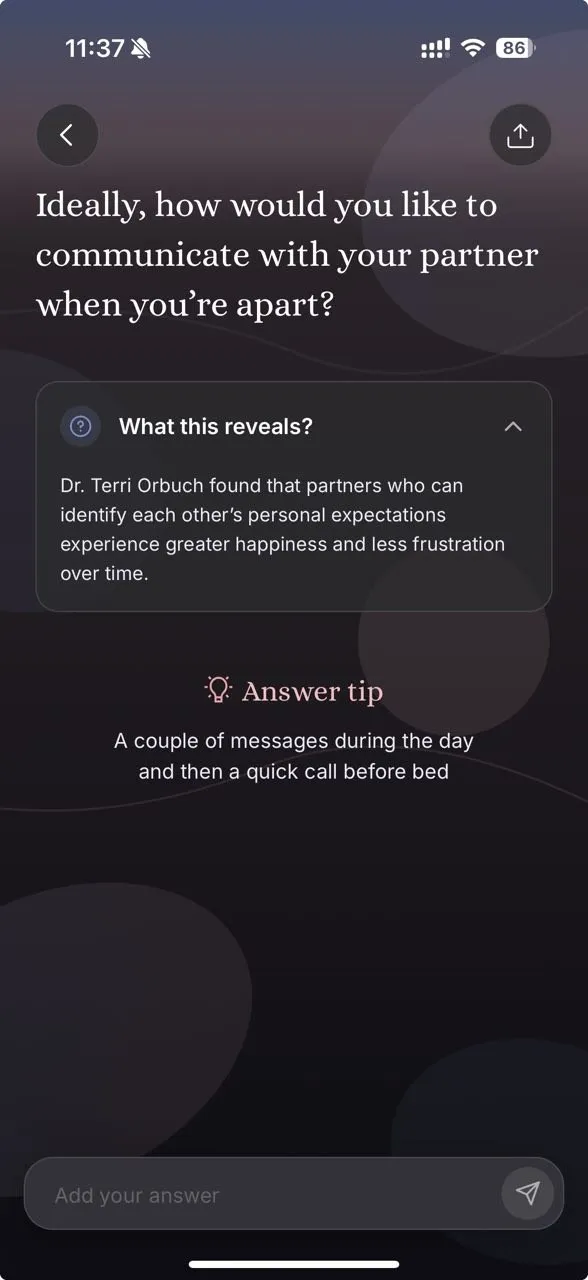
Structured intimacy questions for couples are another evidence-backed tool. The original "36 Questions That Lead to Love" study by Arthur Aron found that mutual vulnerability — sharing progressively deeper answers to personal questions — reliably accelerated emotional closeness between strangers. The same mechanism works in long-term relationships where partners have stopped asking each other anything genuinely curious. Whether you use a card deck, a therapist's worksheet, or a daily question feature in an app, the act of being asked and answering honestly is itself intimacy-building. I've found that even five minutes of intentional conversation — not logistics, not parenting coordination, but genuine curiosity about each other — shifts the emotional temperature of a relationship noticeably within a week.
When to Consider Intimacy Counseling or Therapy
Some intimacy gaps respond well to self-directed work — daily questions, intentional touch, better communication habits. Others run deeper and need professional support. Intimacy counseling is worth considering when the same argument keeps cycling without resolution. It also helps when one or both partners feel consistently unseen or rejected, or when the emotional distance has been building for more than a few months without improvement. A licensed therapist trained in EFT or the Gottman Method can help couples identify the underlying attachment patterns driving the disconnect. That's often far more effective than trying to address the surface-level symptoms — frequency of sex, who initiates, who pulls away — in isolation.
It's worth noting that intimacy therapy isn't only for couples in crisis. Many couples use it proactively — to deepen a good relationship, navigate a life transition (new baby, career change, empty nest), or simply learn each other's emotional language more fluently. The earlier you address an intimacy gap, the easier it is to close. Waiting until resentment has calcified makes the work harder for everyone. From my perspective, the couples who thrive long-term aren't the ones who never struggle — they're the ones who treat their relationship like something worth actively investing in, year after year.
Want to Build Deeper Intimacy Daily?
Five minutes a day, guided by relationship science — built for two real people.
Try Cuddle Free for 7 DaysDisclosure: This page contains affiliate links. We may earn a commission at no extra cost to you.