
We Just Don't Communicate Anymore: How to Fix It

If you've caught yourself thinking we just dont communicate anymore, you're not alone — and you're not imagining it. Cuddle, a relationship coaching app used by over 20,000 couples, consistently finds that communication breakdown is the first thing partners name when they describe feeling disconnected. Research backs this up: 65% of couples cite poor communication as their biggest relationship challenge, and studies published in Couple and Family Psychology found that 70% of women and 59% of men named it as a major contributor to divorce. The good news? Communication is a learnable skill. This guide walks you through why the silence happens and exactly what you can do to break it.
Why "We Just Don't Communicate Like We Used to" Happens
Communication doesn't collapse overnight. It fades — slowly, quietly — until silence becomes something both partners are somehow used to. The trigger is rarely one big fight. More often, it's the accumulation of small moments where one partner tried to connect and felt dismissed, or where saying something honest felt riskier than saying nothing at all. Over time, couples stop asking and start assuming. The conversations that once felt easy start to feel loaded, and eventually both people stop trying.
Life logistics accelerate the drift. Work pressure, parenting duties, and financial stress can overwhelm even the strongest couples. When someone feels emotionally drained, real conversation becomes harder to access. You're still technically talking — about schedules, groceries, the kids — but you're not actually saying anything that matters. That gap between surface-level exchange and genuine connection is where the feeling of "we're just not on the same page" takes root.
Why You Feel Like My Partner Never Listens to Me: The Attachment Style Connection
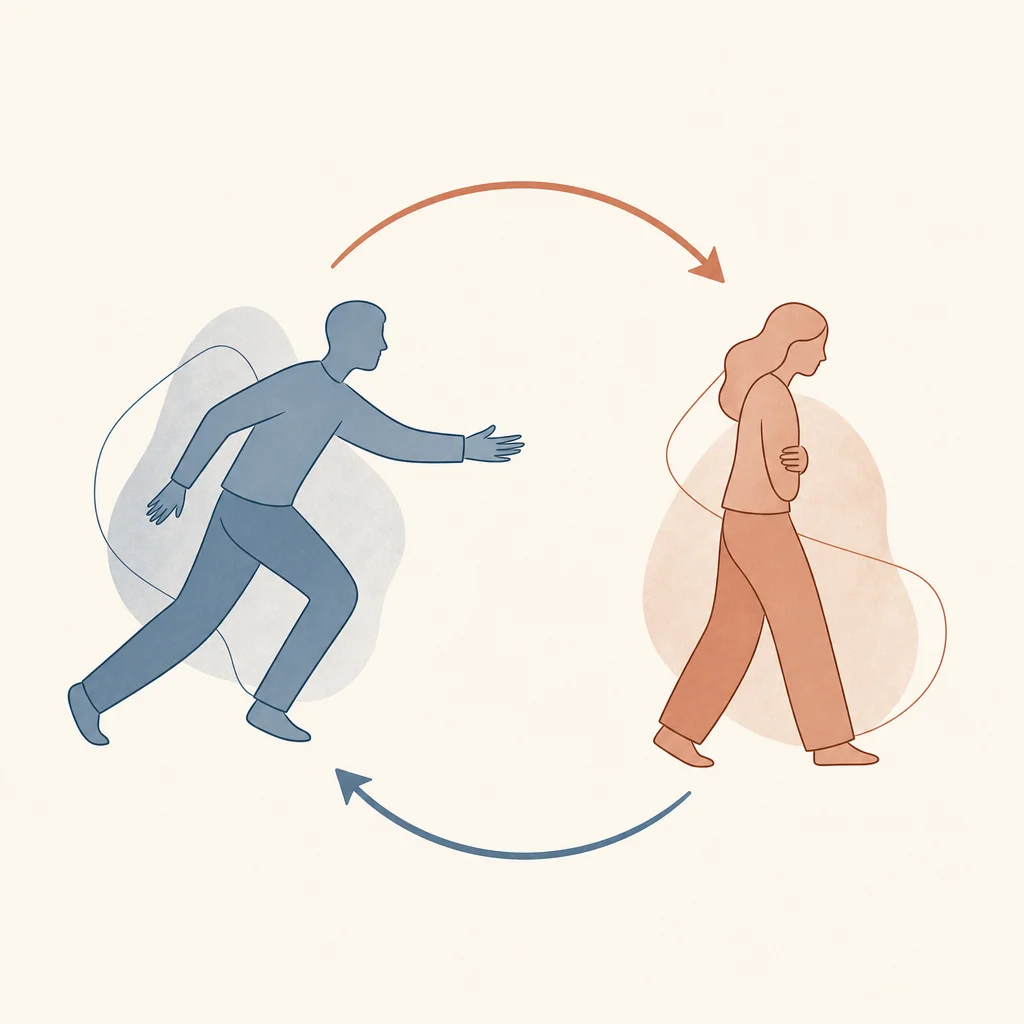
One of the most underappreciated reasons partners stop communicating is attachment style — the deep-seated pattern each person developed in childhood for how to handle closeness and conflict. A person with an anxious attachment style may pursue connection through repetition or emotional intensity, which can come across as overwhelming to a partner who is already feeling flooded. In other words, the pursuit reads as pressure. A person with an avoidant style may withdraw precisely when closeness is needed most, appearing cold when they're actually experiencing something closer to emotional paralysis.
Neither pattern is a character flaw — both are learned adaptations. But without awareness, the anxious-avoidant cycle becomes a trap: one partner chases, the other retreats, and both end up feeling unheard. If you find yourself thinking "my partner never listens to me" or "why don't I feel heard in this relationship," it's worth asking whether attachment patterns are running the show underneath your actual conversations.
Gottman's Four Horsemen: Patterns That Kill Connection
Dr. John Gottman's decades of research identified four communication behaviors — criticism, contempt, defensiveness, and stonewalling — as the strongest predictors of relationship breakdown. Contempt is the most damaging: it signals that you see your partner as beneath you rather than beside you. On the other hand, stonewalling is the emotional shutdown where one partner simply goes silent. It's what most people recognize as "my partner never listens to me." But it's often less about indifference and more about a nervous system that's completely overwhelmed.
The important thing Gottman's research makes clear is that these patterns are learned — which means they can be unlearned. Couples who actively work on communication through structured approaches report a 50% improvement in relationship satisfaction. Identifying which of the four patterns shows up most in your relationship is the first concrete step toward changing it. In my coaching research, I've found that simply naming the pattern out loud — "I think I'm stonewalling right now" — already interrupts the cycle.
How to Rebuild Communication: Five Practical Steps
Rebuilding starts with safety, not strategy. Before you introduce any new communication technique, both partners need to feel that honesty won't be punished. That means slowing conversations down — fast exchanges escalate, slow ones connect. It also means listening to understand rather than listening to respond. For instance, most people prepare their rebuttal while their partner is still mid-sentence. That's why so many partners feel like "my opinions don't matter" even when their partner is technically present in the room.
- Create a low-stakes daily check-in — five minutes, no phones, one question each. "What's one thing on your mind today?" builds the muscle before you need it for harder conversations.
- Name the pattern, not the person — "I notice we shut down when money comes up" lands differently than "You never talk to me about finances." Attack the dynamic, not your partner's character.
- Use repair attempts early — Gottman defines a repair attempt as any gesture that de-escalates conflict before it spirals. A simple "I need a pause" counts. Use it before you're flooded, not after.
- Separate venting from problem-solving — Ask your partner: "Do you need me to listen, or do you want ideas?" This one question removes a huge source of feeling unheard in relationships. In my coaching practice, I've noticed couples who succeed at this step report the fastest shift — usually within two weeks.
- Revisit unfinished conversations — Most couples drop hard topics after a fight and never return. Circling back — even 48 hours later — signals that the conversation matters more than your comfort.
If you want a structured way to build these habits together, Cuddle's guided communication courses offer a research-backed framework — built on the Gottman Method and Emotionally Focused Therapy — that walks both partners through the exact skills above in short daily sessions. It's one option worth exploring if you find it hard to practice these steps without external scaffolding. Alternatives like the book Hold Me Tight by Dr. Sue Johnson (founder of EFT) or a licensed couples therapist through the Gottman Referral Network are equally strong paths.
When to Seek Professional Help
Self-guided tools work well for couples dealing with drift and disconnection — the slow fade of communication that happens over months or years. But some situations call for a licensed professional. If your relationship involves active conflict that feels unsafe, untreated mental health conditions on either side, or a significant trust rupture like infidelity, a couples therapist is the right first step. Emotionally Focused Therapy (EFT) and the Gottman Method are both evidence-based approaches with strong published outcomes for communication repair.
In my experience researching relationship tools, the couples who make the most progress are the ones who combine professional support with consistent daily practice. Therapy gives you the insight; daily habits give you the repetition that makes new patterns stick. If you've finished a round of couples therapy and want to maintain the skills between sessions, structured daily tools can bridge that gap effectively.

Small Daily Habits That Keep Communication Alive
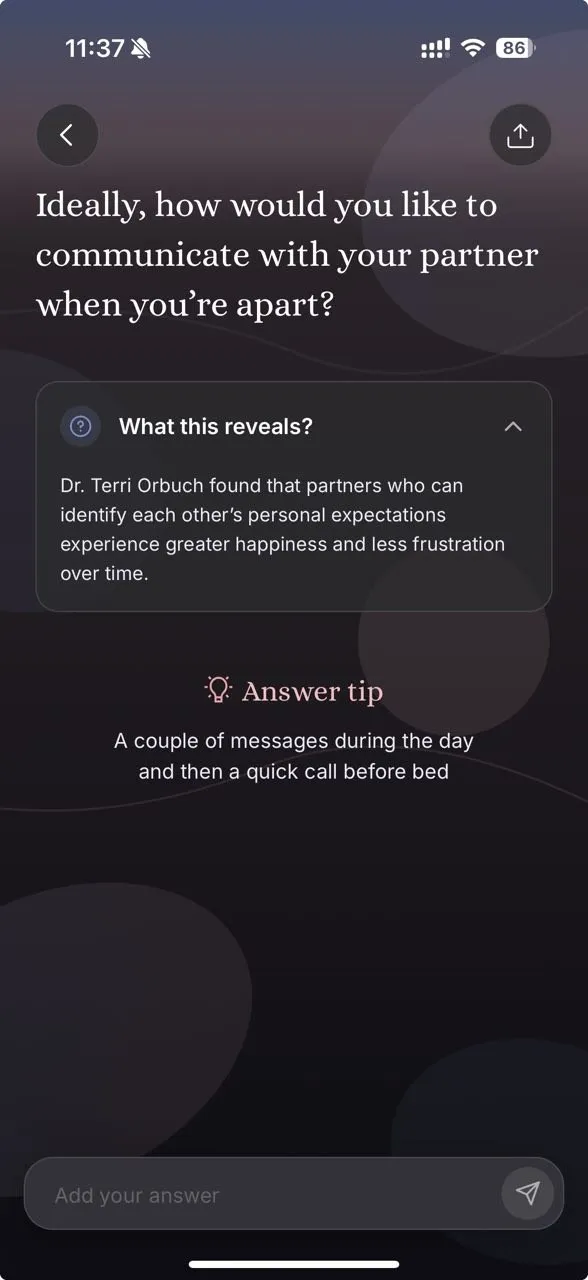
Communication doesn't stay healthy on its own — it needs maintenance. Research by Dr. Terri Orbuch found that partners who regularly identify each other's expectations report significantly higher relationship satisfaction than those who assume they already know. The habit doesn't have to be elaborate: a single meaningful question before bed, a two-minute debrief after a hard day, or a weekly ritual where each partner shares one thing they appreciated and one thing they need more of. Consistency beats intensity every time.
The couples who reconnect after a communication breakdown aren't the ones who had one transformative conversation. They're the ones who showed up for small, imperfect exchanges day after day until the relationship felt safe again. If you're starting from silence, that's exactly where to begin — not with the hardest conversation, but with the easiest one you've been avoiding.

Disclosure: This page contains affiliate links. We may earn a commission at no extra cost to you.
Related Articles


Want a Daily Communication Ritual That Actually Sticks?
Cuddle offers guided daily exercises built on the Gottman Method — one option worth trying if structure helps.
Explore Cuddle Free for 7 Days