My Wife Never Initiates Intimacy: Why It Happens and What to Do

If you feel like my wife never initiates intimacy has become a recurring thought in your relationship, you're not imagining things — and you're not alone. Research published in Psychology Today found that 80% of couples experience mismatched libidos at some point, and one-sided initiation is one of the most common patterns that emerges. The frustration is real. So is the confusion about what it actually means. Before you spiral into worst-case scenarios, it helps to understand the science behind why your partner not initiating sex happens — and what genuinely works to shift the dynamic. If you're looking for a structured way to start those conversations, Cuddle is one app worth exploring for guided intimacy exercises couples can do together.
What 'Initiating Intimacy' Actually Means
Before diagnosing the problem, it's worth getting clear on what we mean by physical intimacy and why initiation matters so much emotionally. Research defines intimacy as strong feelings of bonding, connectedness, and closeness — and physical intimacy is just one of several forms of intimacy in a relationship. There's also emotional intimacy, intellectual intimacy, and experiential intimacy. When one partner always initiates physical intimacy, it can create an invisible imbalance: one person feels unwanted, while the other can start to feel pressured or obligated. Neither experience is sustainable. In short, understanding the different types of intimacy at play in your relationship is the first step toward diagnosing what's actually off.
The distinction between intimacy vs sex also matters here. Sex is a specific physical behavior. Intimacy — including physical intimacy in relationship — is the broader felt sense of being desired, chosen, and close to your partner. For example, your wife may still feel emotionally connected to you and yet not initiate sex, or she may have drifted from both. Knowing which is true changes the conversation you need to have and the steps that will actually help.
6 Real Reasons Your Partner Isn't Initiating Intimacy
In my experience reviewing relationship research and talking with couples navigating this exact issue, the reasons why a partner stops initiating are almost never simple. They're rarely about attraction fading. Here are the six most evidence-backed explanations for why your partner not initiating sex becomes a pattern.
1. Desire Becomes Context-Dependent Over Time
A 2018 review in the Archives of Sexual Behavior found that sexual desire decreases as a relationship lengthens. This pattern is much stronger for women. For many women, desire shifts from spontaneous (it just appears) to responsive (it emerges in the right context). In practice, this means your wife may genuinely want physical intimacy but doesn't feel the spontaneous urge to initiate it. She needs the emotional temperature, the environment, and the connection to be right first. Pressure, stress, or emotional distance can block responsive desire entirely. That's why simply waiting for her to "come around" rarely works.
2. Unresolved Conflict Sits Between You
When intimacy carries unresolved conflict, it stops being about closeness and starts carrying emotional weight. Arguments, disappointment, and past rejection can all collect around the idea of sex until it feels tense rather than connecting. For example, if your wife once initiated and was met with criticism, distraction, or emotional withdrawal, it makes complete sense that she'd pull back. Emotional safety — knowing that closeness won't be used against you later — is a prerequisite for desire, not a nice-to-have. In my view, this is the most underestimated reason couples experience no intimacy in marriage: the bedroom becomes the site of every unresolved argument.
3. The Mental Load Is Draining Her
2022 research cited by PsychCentral found that women tend to take on more household labor. They also perceive that imbalance as unfair more often than men. That unequal distribution creates chronic stress — and chronic stress is one of the most reliable desire-killers known to relationship science. If your wife is managing the household, the kids, her career, and the emotional labor of the relationship, she may simply have nothing left by the time the two of you are alone. This isn't a rejection of you. It's exhaustion.
4. Fear of Rejection Has Trained Her to Wait
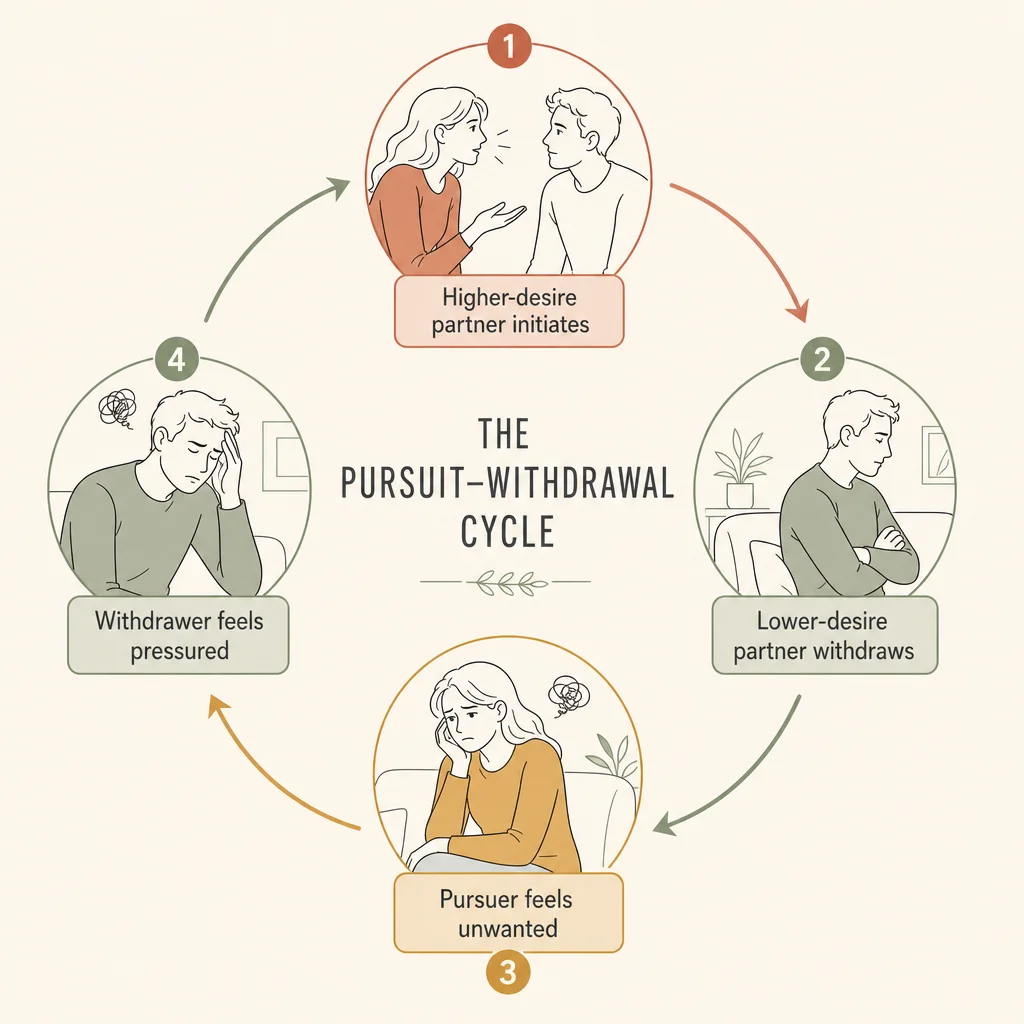
Empirical findings from researchers at the Kinsey Institute show that participants frequently attribute diminished sexual desire to a lack of positive reinforcement after initiation attempts. In plain terms: if she's reached out before and felt rejected — even subtly, even unintentionally — she learned that waiting is safer than risking another "no." On the other hand, this dynamic is especially common in couples where the higher-desire partner has been inconsistent in their responses. The pursuit-withdrawal cycle that follows creates more distance, not less.
5. Hormonal and Physical Factors Are at Play
Hormonal birth control, postpartum changes, perimenopause, thyroid issues, and certain antidepressants can all significantly reduce libido. Many women on hormonal contraception experience reduced testosterone levels without connecting the dots. Testosterone is the hormone most directly linked to spontaneous sexual desire. This isn't psychological. It's physiological, and it deserves a conversation with a doctor, not a couples argument. In short, if your wife doesn't initiate and you've ruled out emotional factors, a hormonal or medical cause is worth exploring with her healthcare provider.
6. She Doesn't Know What She Wants — Or How to Ask
Some women don't initiate physical intimacy because they haven't fully identified their own desires. Others feel shame around expressing them. Research on women's sexuality consistently shows that body image, self-confidence, and permission to want sex are all tied to initiation rates. For example, women who hold a positive view of themselves report higher levels of intimate encounters and arousal. If your wife is struggling with self-image or has internalized cultural messages that women "shouldn't" be sexually assertive, that script may be suppressing initiation — not lack of attraction.
Why Your Partner Isn't Initiating Sex: The Pursuit-Withdrawal Trap
Here's the painful cycle that plays out in most relationships where one partner never initiates: the higher-desire partner initiates, gets rejected or ignored, feels unwanted, tries harder, and the lower-desire partner withdraws further to escape the pressure. Research from therapists confirms that the key difference between couples who struggle and those who succeed isn't the size of the desire gap. It's how partners respond to it. In practice, couples who address desire discrepancies openly report much better outcomes than those who avoid the conversation entirely. The pursuit-withdrawal loop doesn't fix itself. It requires deliberate interruption.
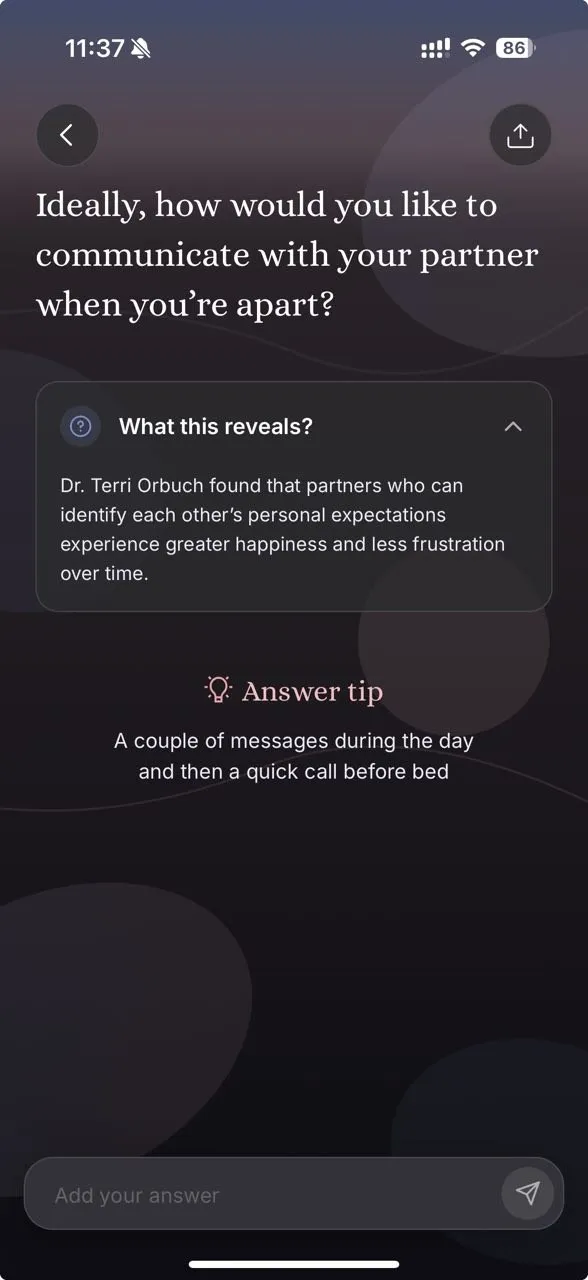
Breaking this pattern means the higher-desire partner temporarily reduces initiation pressure while creating more conditions for emotional safety and connection. On the other hand, that sounds counterintuitive, but it works — because desire for most women is responsive, not spontaneous. You can't manufacture it through persistence. You can create the conditions where it naturally emerges. This is where working on how to improve emotional intimacy becomes the real lever, not trying to engineer more physical contact directly. If you want a structured approach to those conversations, Cuddle's guided intimacy courses walk couples through exactly this kind of emotional reconnection work.
Practical Steps to Shift the Dynamic
When you're asking why doesn't my partner initiate intimacy anymore, the most effective answer is rarely a single fix. It's a set of consistent small shifts that rebuild the conditions desire needs. Here's what relationship science actually recommends — and what I've seen work in practice.
- Have the conversation outside the bedroom. Talking about desire discrepancy during or right before sex almost always backfires. Raise it during a calm, neutral moment — a walk, a quiet dinner — and use curiosity rather than complaint as your frame.
- Increase non-sexual touch. Hugging, kissing, hand-holding, and physical closeness that carries no expectation of sex rebuilds the tactile safety that makes sexual initiation feel less loaded. Research shows this reliably increases a partner's openness over time.
- Ask intimacy questions for couples. Structured questions that invite vulnerability — about desires, fears, and needs — lower the barrier to honest conversation. They shift the dynamic from assumption to discovery.
- Address the mental load together. If household labor is unequal, redistribute it. Desire doesn't emerge from exhaustion. Sharing the load is a form of foreplay that most couples overlook entirely.
- Consider intimacy counseling or sex therapy. A licensed therapist specializing in sexual desire — or a couples therapist trained in Emotionally Focused Therapy (EFT) — can help both partners understand their desire patterns without blame. This is especially useful when the pattern has persisted for six months or more.
- Explore the topic together, not as a problem to solve. Framing intimacy as a shared exploration rather than a deficiency in one partner changes the emotional tenor of every conversation that follows.
When to Seek Intimacy Counseling or Professional Support
If one-sided initiation has become entrenched — especially if it's paired with emotional distance, frequent conflict, or one partner feeling chronically unwanted — it's worth bringing in a professional. Intimacy counseling and sex therapy are not last resorts. They're evidence-based tools that help couples understand the specific shape of their desire patterns and develop strategies that work for both people. In practice, marriage counselors report that differing sex drives and opinions on how to initiate are among the most common reasons couples enter therapy. That means therapists see this every day and have effective frameworks for it.
Emotionally Focused Therapy (EFT), developed by Dr. Sue Johnson, is particularly well-suited to this issue because it targets the attachment and emotional safety dynamics that underlie desire. The Gottman Method, developed by Drs. John and Julie Gottman, is another evidence-based framework that helps couples rebuild the friendship and admiration layer that desire depends on. Both approaches work best with a licensed clinician. For example, apps and self-help tools — including Cuddle — work well as complements to therapy or as a starting point for couples who aren't ready for formal sessions yet. They don't replace professional care when the pattern is deeply entrenched.

What This Is Not: Clearing Up the Myths
One of the most damaging assumptions men make when their wife never initiates intimacy is that it means she's no longer attracted to them, or that the relationship is failing. Neither is automatically true. Research is clear that sexual desire decreases in long-term relationships for most people — and that this decline is steeper and more context-dependent for women than for men. It doesn't mean love has evaporated. It means the conditions that support desire need active attention. In short, the couples who thrive don't wait for desire to magically return. They create the emotional environment where it can.
It's also worth separating the question of initiation from the question of desire entirely. Some women feel genuine desire but don't initiate due to cultural conditioning, past rejection, or communication barriers. On the other hand, others have lower desire overall. These are different problems with different solutions. From my perspective, the most productive question isn't "why won't she initiate" — it's "what does she need to feel safe enough to want to?" That reframe changes everything about how you approach the conversation.

Building a Relationship Where Both Partners Want to Connect
The goal isn't to get your wife to initiate more often as a performance metric. The goal is to build a relationship where both of you feel safe, desired, and genuinely interested in connecting — physically and emotionally. That requires ongoing investment in emotional intimacy, honest communication about needs, and a willingness to understand each other's desire patterns rather than judge them. In short, no intimacy in marriage doesn't have to be the permanent state. It's often a signal that the relationship needs more intentional care, not that it's broken beyond repair.
Small, consistent investments compound over time. For example, couples who practice daily check-ins, ask each other meaningful questions, and make space for vulnerability outside the bedroom report stronger physical intimacy inside it. If you're not sure where to start, structured tools — whether a couples therapist, a workbook like Hold Me Tight by Dr. Sue Johnson (which draws on EFT), or an app that guides daily connection — can provide the scaffolding until the habits become natural.
Want to Rebuild Intimacy Together?
Cuddle offers guided daily exercises built on EFT and Gottman research — one option for couples who want structure, not guesswork.
Explore Cuddle Free for 7 DaysDisclosure: This page contains affiliate links. We may earn a commission at no extra cost to you.