
Intimacy Therapy: How It Works & When to Seek Help

Intimacy therapy is a structured, evidence-based form of professional support that helps couples identify and work through the barriers preventing genuine closeness — emotional, physical, or both. Cuddle is one digital option couples explore alongside or after therapy to maintain daily connection habits, but professional intimacy therapy goes deeper: it pairs you with a licensed clinician who can surface patterns neither partner can see alone. Research consistently shows that couples who address intimacy concerns early tend to have far better outcomes than those who wait until a crisis forces their hand.
What Is Intimacy Therapy?
Intimacy therapy is a form of professional talk therapy — delivered individually or as couples therapy for intimacy — that helps partners openly explore the emotional, psychological, and physical dimensions of their connection. It's broader than sex therapy, though the two can overlap. A skilled therapist creates a nonjudgmental space where both partners can name what's actually happening: unmet needs, recurring arguments, emotional withdrawal, or a desire gap that neither person knows how to bridge. I've found that most couples who walk into intimacy counseling aren't in crisis — they're simply tired of feeling like something important has gone quiet between them.
Intimacy therapy addresses different types of intimacy simultaneously. Emotional intimacy — the sense of being truly known by your partner — often erodes before physical intimacy does. Physical intimacy in a relationship suffers when emotional safety disappears. Therapists work across both dimensions because they're deeply intertwined: when one partner feels emotionally distant, physical intimacy often suffers as a direct result. Understanding this connection is where effective treatment begins.
The Main Therapy Methods Clinicians Use

Different therapists use different frameworks, and the right fit depends on your relationship's specific shape. Emotionally Focused Therapy (EFT), developed by Dr. Sue Johnson, focuses on repairing the emotional bond between partners. It helps couples identify the cycles driving their conflict. Studies show that 70–75% of couples see significant improvement in their relationship after EFT, with 90% reporting lasting positive changes. The Gottman Method, built on over 40 years of observational research, takes a more structured approach. It helps couples reduce the behaviors that predict relationship distress — criticism, defensiveness, contempt, and stonewalling, known as the "Four Horsemen."
For couples whose intimacy concerns center on physical connection, therapists often introduce sensate focus — a graduated set of touch exercises that rebuilds comfort and communication around physical intimacy meaning, separate from performance pressure. A therapist may use sensate focus to encourage both partners to express how they like to be touched and communicate their sexual preferences. Both the Gottman Method and EFT are effective in improving sexual intimacy, and despite their differing theoretical foundations, their shared emphasis on emotional regulation and communication skills explains their comparable outcomes.
What Actually Happens in a Session
Through structured conversations and therapeutic techniques, couples learn to understand each other's emotional needs, communicate more effectively, and work toward resolving the underlying issues contributing to their disconnection. A typical session runs 50–90 minutes. The therapist doesn't play referee — in my experience reviewing how couples describe their sessions, the most effective therapists act more like translators, helping each partner hear what the other actually means beneath the words they use. After each session, you and your partner will likely receive "homework" — assignments that are simply opportunities to practice what you discussed with your therapist before the next appointment.
Evidence-based models typically run 12–20 sessions, with duration depending on the safety, motivation, and complexity of the relationship. Some couples finish in fewer sessions; others with deeper trust ruptures or attachment wounds need longer. The important thing is that progress compounds. Just as one exercises their body at the gym, couples are encouraged to practice their communication skills and relationship-building exercises outside of therapy — this practice reinforces the skills learned and allows couples to make real progress.
Signs You Should Seek Intimacy Counseling
Research shows that most couples wait an average of six years after problems start before going to counseling — a delay that often makes therapy less effective because the relationship damage runs deeper. Don't wait that long. Persistent conflict, difficulty communicating, and decreased intimacy are three of the most common signs it may be time to seek couples counseling. Other clear signals include feeling more like roommates than partners, recurring arguments that never resolve, or one partner consistently not initiating intimacy — whether emotional or physical — leaving the other feeling invisible.
Decades of research, especially from The Gottman Institute, point to four powerful patterns — criticism, contempt, defensiveness, and stonewalling — that can predict divorce with over 90% accuracy if left unchecked. If you recognize those patterns in your relationship, that's a strong signal to act now rather than later. You don't need to wait for a crisis: therapy can be helpful during stressful transitions, growing resentment, trust concerns, or intimacy struggles, even if the relationship has not reached a breaking point. Seeking help early is a sign of commitment, not failure.

If you're between sessions or still looking for the right therapist, a daily practice tool like Cuddle's guided check-ins can help you start building connection habits today. (Affiliate link — see disclosure below.)
How to Improve Emotional Intimacy Between Sessions
Therapy works best when couples treat it as a catalyst, not a cure. The real work happens in the daily moments between sessions — the check-in before bed, the question you ask over dinner, the repair attempt after a rough afternoon. Research on how to improve emotional intimacy consistently points to small, consistent actions rather than grand gestures. Intimacy questions for couples — the kind that invite genuine vulnerability rather than surface-level answers — are one of the most accessible tools available outside a therapist's office. You don't need a structured program to start; you need a habit of showing up curious about your partner.
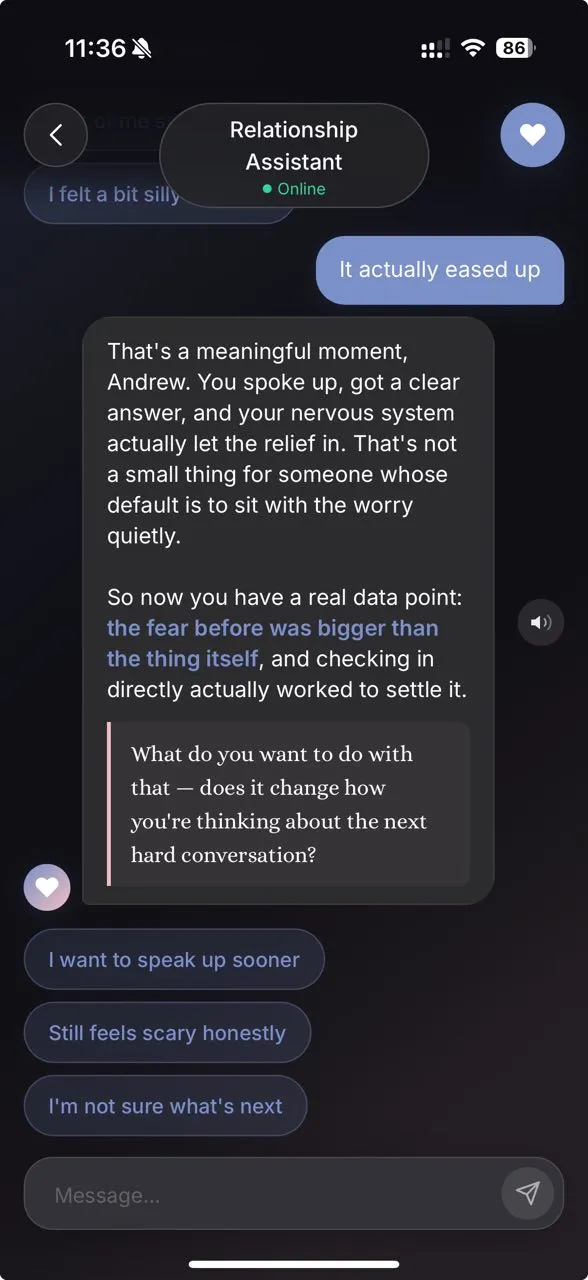
For couples who want structure between sessions, digital tools can help. Cuddle offers daily guided questions, attachment-style quizzes, and a private Relationship Assistant built on Gottman Method, EFT, and CBT frameworks — one option worth exploring if you want a daily practice to complement what you're working on in intimacy counseling. In reader letters I've reviewed, the couples who report the most progress between sessions almost always share one habit: they pick a single small practice — a nightly check-in question, a weekly state-of-the-union — and they actually keep it for months, not weeks. Talkspace and BetterHelp also offer online couples therapy access for those who need licensed professional support but face scheduling or geographic barriers.
When Intimacy Therapy Is Not Enough
Intimacy therapy is powerful, but it has clear limits. Pause if there's active violence, coercive control, untreated addiction, or ongoing affairs — these situations need stabilization or individual therapy first. Couples therapy for intimacy assumes both partners can participate safely and honestly. If one partner is in active crisis — severe depression, trauma responses, or suicidal ideation — individual clinical support takes priority before joint sessions begin. A good therapist will tell you this directly. They will help you sequence care in the right order.
The different types of intimacy challenges also call for different specialists. A general couples therapist handles most emotional and communication issues well. A certified sex therapist adds specialized training for physical intimacy concerns, desire mismatches, or sexual dysfunction. If sex is a main reason bringing you to counseling, consider finding a therapist with specialty training in sexuality. Asking a potential therapist about their specific training in intimacy work is not overstepping — it's smart consumer behavior that improves your outcomes.

Intimacy therapy — whether you pursue it through a licensed couples therapist, intimacy counseling, or a structured self-guided practice — works because it creates accountability, language, and skill where couples previously had only frustration. The forms of intimacy you want to rebuild are learnable. Most couples who engage fully with evidence-based support see meaningful change within a few months. The only real mistake is waiting too long to start.
Want a Daily Intimacy Practice Between Sessions?
Guided by Gottman, EFT, and CBT frameworks — five minutes a day, built for two.
Try Cuddle Free for 7 DaysDisclosure: This page contains affiliate links. We may earn a commission at no extra cost to you.